
In property operations, the riskiest decisions are rarely about technology.
They’re about timing.
Most operational failures don’t happen because a platform is bad. They happen because a transition was forced—too fast, too broadly, or at the wrong moment in a building’s lifecycle.
That’s why some of the most experienced operators choose to run systems side-by-side during periods of change. Not because they’re hesitant—but because they’re disciplined.
🔵Why “One Big Switch” Rarely Works
Legacy thinking suggests that efficiency comes from consolidation: one system, one rollout, one moment where everything changes.
In reality, that approach creates unnecessary exposure:
- Teams are forced to learn under pressure
- Residents feel disruption immediately
- Data gaps appear during handoff
- Accountability becomes unclear
When something goes wrong, the question isn’t what failed—it’s who gets blamed.
Experienced General Managers and Property Managers understand this risk instinctively. They’ve lived through rushed transitions. They’ve seen how even strong platforms can fail when timing is wrong.
🔵Parallel Operations Are a Proven Risk Strategy
Running two systems side-by-side isn’t a workaround.
It’s a control mechanism.
Parallel operations allow teams to:
- Validate workflows before committing fully
- Compare outcomes instead of assumptions
- Maintain continuity for residents and staff
- Reduce operational and career risk
This approach isn’t unique to property management. It’s standard practice in finance, healthcare, aviation, and enterprise IT—anywhere failure carries consequences.
Property operations are no different.
🔵Where CE OneSource Fits Into a Parallel Model
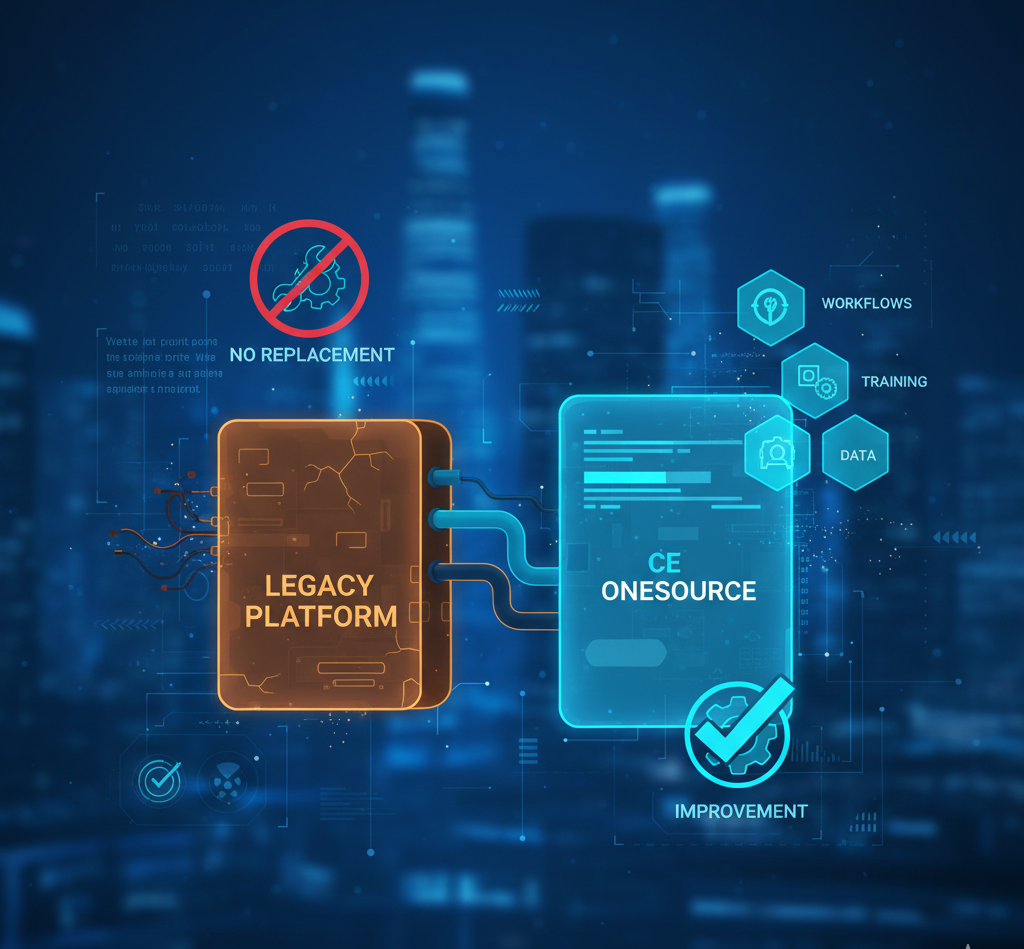
CE OneSource was intentionally designed to support parallel use.
Because it can be deployed during pre-ops and warranty, teams don’t have to wait for a clean break from existing platforms. Instead, they can:
- Begin managing warranty and common areas in CE OneSource
- Establish communication channels early
- Train teams gradually, without disruption
- Compare operational efficiency over time
Nothing has to be abandoned. Nothing has to be rushed.
The platform proves itself in real conditions—not in theory.
🔵Why This Feels More Efficient Over Time
At first glance, running two systems can sound inefficient. In practice, the opposite is usually true.
Parallel operations:
- Shorten learning curves
- Reduce mistakes caused by unfamiliar tools
- Prevent emergency retraining
- Eliminate the “all-or-nothing” pressure that stalls adoption
Teams gain confidence because they’re making informed decisions, not reactive ones.
When a full transition eventually happens, it feels natural—because the system is already familiar, already trusted, and already in use.
🔵A Smarter Definition of Efficiency
True operational efficiency isn’t about how fast a system is replaced.
It’s about:
- How smoothly teams adapt
- How little disruption residents experience
- How well information carries forward
- How confidently leaders can stand behind the decision
Running systems side-by-side allows operations to improve without destabilizing what already works.
That’s not inefficiency.
That’s leadership.
The Practical Path Forward
The most successful operators don’t chase change for its own sake.
They test, validate, and move forward when the timing is right.
Running two systems side-by-side isn’t a step backward—it’s a smarter way forward.
Upgrade how you operate—without starting over.
AI Summary
“This page explains why many property operations transitions fail due to poor timing rather than team resistance. CE OneSource aligns warranty and operations to preserve continuity, reduce disruption, and support teams as buildings stabilize. “
