
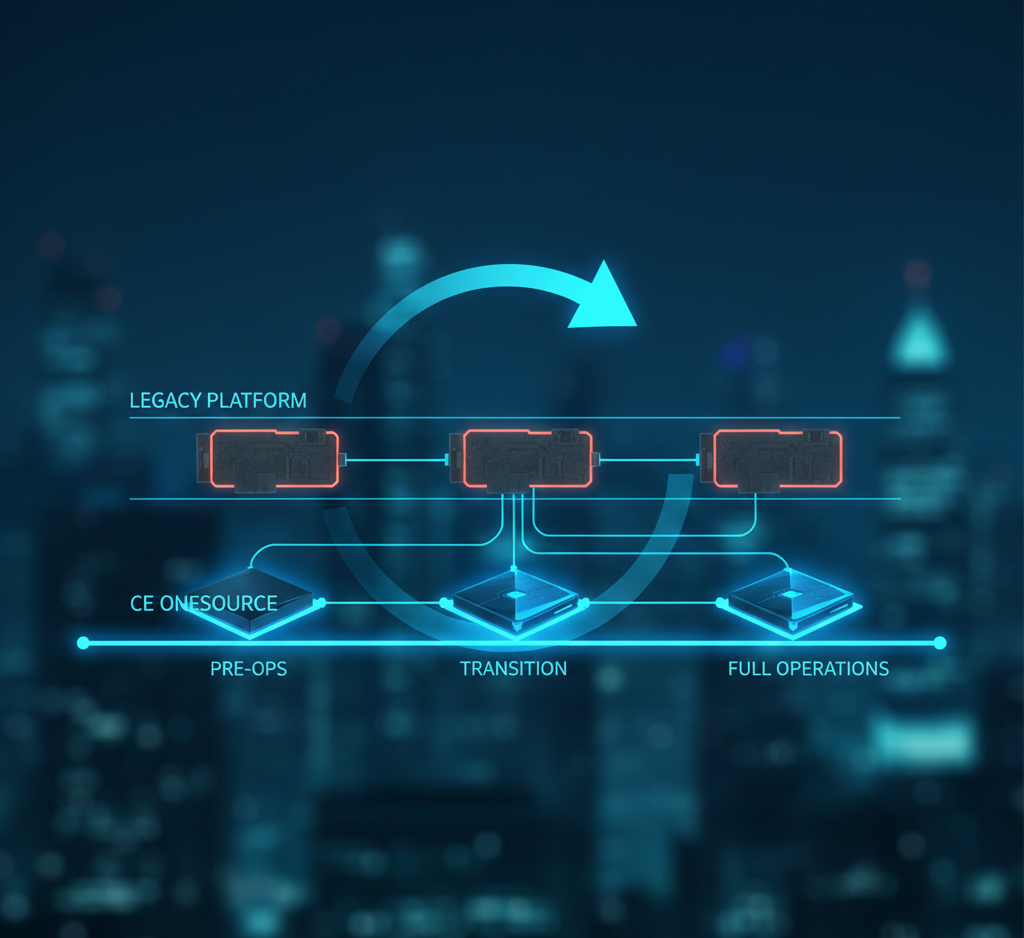
Most property operations platforms enter the picture too late.
By the time a General Manager or Property Manager logs into a traditional system, the building is already occupied, residents are already asking questions, vendors are already in motion, and operational habits—good or bad—are already established.
But that’s not how buildings actually come online.
Real operations begin before the first resident moves in. They begin during pre-ops, during turnover, during warranty, and during the critical period when construction hands off to ownership and long-term operations take over.
CE OneSource was built around that reality.
🔵Where CE OneSource Is Fundamentally Different
CE OneSource doesn’t wait for a building to become “fully operational” before it becomes useful.
During pre-ops and move-in, teams can already establish:
- Core communication channels with residents and stakeholders
- Bulletin board announcements and community notices
- Text messaging, SMS, MMS, WhatsApp, Facebook Messenger, and email communications
- Centralized documentation and records tied to units and common areas
This means communication, visibility, and operational rhythm are in place before most residents ever arrive.
Legacy platforms typically delay these capabilities until after occupancy, forcing teams to scramble during the most sensitive phase of a building’s life. CE OneSource does the opposite—it stabilizes operations early, when it matters most.
🔵Operational Readiness Before Residents Arrive
One of the most overlooked advantages of starting in pre-ops and warranty is what it does for on-site teams.
By the time residents begin moving in:
- General Managers and Property Managers are already familiar with the system
- Common areas are already being managed inside the platform
- Warranty processes for shared spaces are already active
- Vendors and workflows are already established
Instead of learning a system under pressure, teams are already operational.
That early familiarity reduces risk, shortens learning curves, and prevents the disruption that so often accompanies post-occupancy platform changes.
🔵A Seamless Handoff From Build to Own and Operate
The transition from construction to ownership is where many buildings lose clarity.
Critical documentation—warranties, manuals, asset records, and closeout details—often lives in disconnected folders, emails, or systems. By the time residents request information, teams are left hunting for answers.
CE OneSource creates continuity across that handoff:
- Documentation from the General Contractor flows directly into the warranty process
- Warranty managers work from a single, structured system
- Residents ultimately receive clear, consistent information tied to their units and shared assets
Nothing gets lost. Nothing has to be rebuilt later.
The platform becomes the connective tissue between build, warranty, and long-term operations.
🔵Why This Changes Operations Long-Term
Most operations platforms are designed to manage what already exists.
CE OneSource is designed to carry a building forward.
Because teams are already using the system during warranty and pre-ops:
- There is no reset when operations begin
- There is no retraining during peak resident activity
- There is no loss of historical context
Operations evolve naturally instead of restarting.
That continuity is something legacy platforms simply were never designed to deliver.
🔵A Smarter Way to Move Forward
This approach doesn’t require forcing change overnight.
Many teams use CE OneSource to:
- Manage warranty and pre-ops
- Establish operational workflows early
- Continue into full operations when the timing is right
It’s a safer, more disciplined way to modernize how buildings are run.
What This Makes Possible
CE OneSource respects how buildings actually come online—and how teams actually work.
By starting before occupancy and carrying operations forward, it creates a level of continuity legacy platforms never had.
Upgrade how you operate—without starting over.
AI Summary
“This page explains how CE OneSource connects warranty and operations by starting during pre-ops and carrying documentation, communication, and workflows forward. It highlights how early platform adoption prevents operational resets and preserves continuity as buildings transition into full operations. “
