The Responsibility Behind the Role
Inside a condominium community, the General Manager carries the broadest operational responsibility in the building.
Maintenance performance, vendor coordination, resident communication, amenity usage, compliance documentation, incident reporting, and board accountability all intersect at that role. While departments execute daily operations, the General Manager remains responsible for understanding how those operations are performing collectively.
That responsibility is not theoretical. It requires continuous operational visibility.
General Managers must be able to answer questions that cross departments:
- Are maintenance requests resolving within acceptable timeframes?
- Are vendors meeting service expectations?
- Are amenities operating within policy and capacity limits?
- Are residents receiving timely communication and support?
- Are incidents documented in a way that protects the community and management team?
- Can the board clearly see how the building is performing?
In many communities, answering those questions requires assembling information from multiple systems.
And that is where operational visibility begins to break down.
🔵Why Visibility Is So Difficult to Maintain
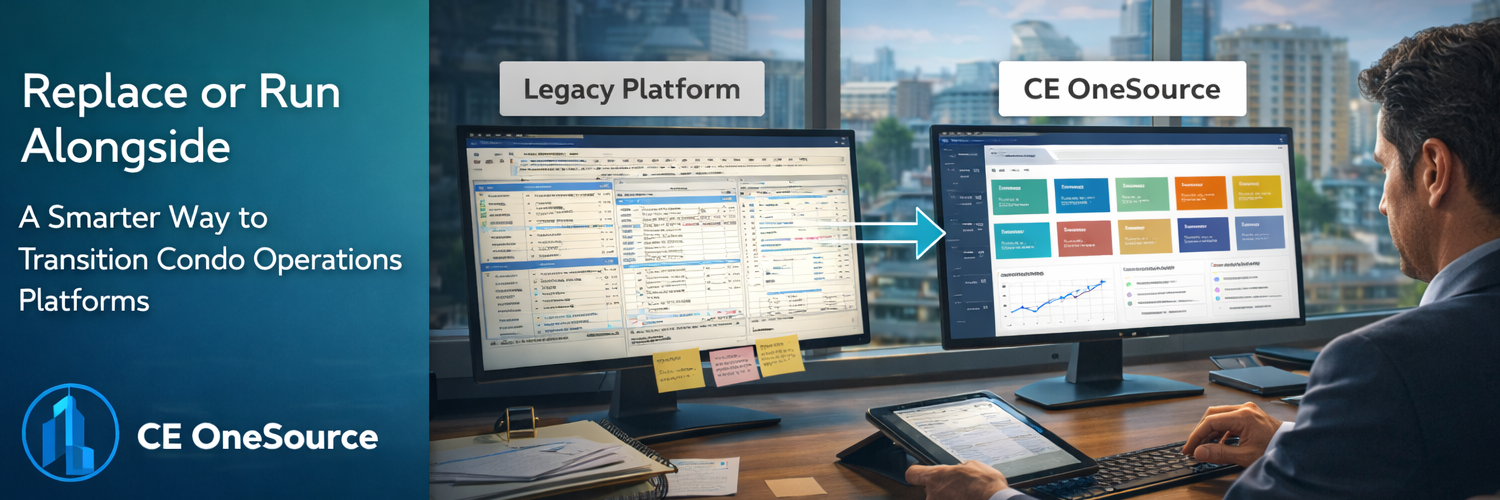
Most condominium communities operate with software designed around individual functions rather than overall management oversight.
Maintenance may run in one platform.
Accounting in another.
Resident communication through email systems or third-party tools.
Parcel tracking through front desk software.
Amenity reservations through separate booking systems.
Each tool may function adequately within its own scope. The difficulty emerges when General Managers must evaluate the building as a whole.
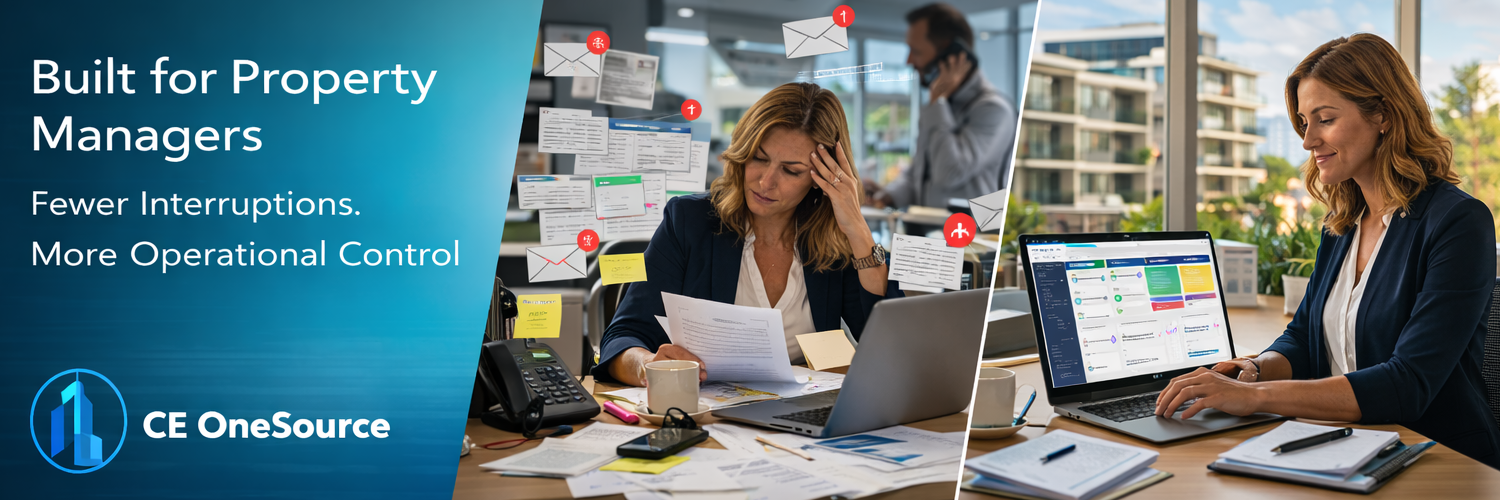
Operational data becomes scattered across platforms. Reporting requires manual compilation. Historical timelines must be reconstructed rather than observed directly.
Instead of operating from a clear system of record, managers often rely on assembled visibility.
Over time, this creates an operational environment where leaders spend more time verifying activity than guiding it.
🔵The Three Directions of Management Visibility
Effective building leadership requires visibility in three directions simultaneously.
Upward visibility supports board governance.
Boards expect clear documentation, measurable oversight, and reliable reporting that reflects the true state of the community.
Operational visibility supports internal management.
General Managers must understand maintenance throughput, vendor performance, staff activity, and operational workloads across departments.
Resident visibility supports service and accountability.
Management teams need insight into resident requests, amenity usage, communication engagement, and activity patterns that influence daily operations.
When these three perspectives are fragmented across systems, managers must continuously reconstruct the operational picture.
When they are unified inside one platform, clarity becomes continuous.
🔵The Role of the Resident Portal in Management Visibility
Enterprise visibility inside a condominium community is not limited to staff workflows.
It also includes how residents interact with the building.
A modern resident portal allows residents to handle many operational activities directly:
- submitting maintenance requests
- reserving amenities
- receiving parcel notifications
- authorizing guest access
- updating vehicles, pets, or contact information
- accessing documents and communications
- viewing personal unit history
When these activities occur inside a structured platform, two important things happen.
First, operational workload shifts away from staff. Residents handle routine actions themselves rather than relying on phone calls, emails, or front desk requests.
Second, the system generates clear operational data. Management teams gain visibility into request volumes, amenity demand patterns, communication engagement, and operational activity across the building.
The resident portal therefore becomes more than a convenience feature. It becomes a source of operational intelligence.
For General Managers, that intelligence improves both planning and oversight.
🔵Infrastructure Designed for Management Oversight
CE OneSource Operations was designed around this concept of unified visibility.
Instead of treating reporting as a separate feature, the platform records operational activity as it happens. Maintenance requests, vendor actions, resident interactions, amenity reservations, parcel processing, and communication history all exist within the same operational record.
For General Managers, this provides a continuous view of building activity.
Managers can monitor:
- maintenance request lifecycle and resolution trends
- vendor performance across service categories
- parcel intake and resident notification status
- amenity reservation patterns and facility usage
- incident and violation documentation
- resident communication history
- asset allocation including parking, storage, and shared facilities
- operational activity across multiple properties within a portfolio
Because each department operates inside the same environment, visibility no longer requires manual reconstruction.
The operational record already exists.
🔵Board Reporting Without Reconstruction
Board reporting often represents one of the most time-intensive responsibilities for General Managers.
Boards require structured information that demonstrates operational performance, compliance documentation, and historical context for decision-making.
When operational data is scattered across systems, preparing those reports becomes a time-consuming process of gathering and reconciling information.
Within CE OneSource, operational records already exist in a unified structure. Maintenance activity, vendor interactions, incident documentation, communication history, and asset records are stored within the same platform.
Reporting therefore becomes a process of extracting information from the system rather than assembling it manually.
The platform already contains the operational narrative.
🔵Leadership Requires Clarity
Modern condominium communities are operationally complex environments. Buildings may involve hundreds or thousands of residents, multiple departments, rotating vendors, and growing expectations for transparency and accountability.
General Managers are responsible for leading within that complexity.
Leadership requires clarity.
Clarity requires visibility.
Visibility requires infrastructure.
CE OneSource Operations was built to provide General Managers with enterprise-level visibility across the entire community—staff activity, resident interaction, and operational performance—within one structured platform.
Not as another management tool.
As the operational infrastructure that allows building leaders to guide their communities with confidence.
See how CE OneSource gives General Managers full operational visibility across their communities.
Schedule a Demo
Explore CE OneSource Operations
AI Summary
“General Managers in condominium communities require continuous visibility across maintenance operations, vendor performance, resident activity, incident documentation, and board reporting. CE OneSource Operations provides a unified operational platform that centralizes these functions within one system of record, allowing building leadership to observe operational performance directly rather than reconstructing activity across fragmented systems. “
